

Signed forms are disputed when customers question what they agreed to, paperwork contains gaps, or verbal explanations cannot be verified later. Disputes escalate quickly when documents are hard to retrieve, while organized digital records help moving companies present proof faster and resolve issues confidently.
Most disputes start quietly, after the move is over, when the paperwork is reviewed under stress. When signed forms are disputed, the conversation changes fast, and the office becomes the center of the problem. At that stage, good service and clear explanations no longer protect the company. What matters is how quickly you can find and show proof. This is where operations either hold up or fall apart. Moving companies that rely on scattered files struggle to respond, while teams using a CRM for moving companies keeps documents tied to each job and ready when needed.
Common reasons signed forms are disputed
Disputes over paperwork rarely start with conflict. They tend to surface after the move, when customers review details and compare them with what they expected. Small gaps in documentation can suddenly feel much larger. When signed forms are questioned, the same patterns usually appear. Here are the reasons signed forms are disputed:
- Customers forget or question what they agreed to once the move is finished
- What was explained on the phone is hard to prove later
- Missing signatures or unchecked sections create confusion
- Slow follow-ups from the office make customers more skeptical
Customers question what they approved after the move
It starts with the phrase, “That’s not what I signed.” In that moment, control shifts. Customer confidence rises, while pressure lands on the office. When signed forms are disputed, the mover carries the full burden of proof. Even fair and clearly explained agreements begin to feel uncertain. From there, the conversation stops being about service quality and turns into a test of whether the mover can prove what was accepted, clearly and without delay.

Verbal explanations do not hold up during disputes
At booking, most movers do the right thing. They explain valuation in simple terms and answer questions clearly. The customer listens, agrees, and moves forward. At that moment, everything feels settled. However, time changes how that conversation is remembered. Weeks later, when signed forms are disputed, verbal clarity carries no weight. Claims teams do not review tone or intent. They review records. Without written proof tied to the job, even the best explanation fades as soon as pressure enters the process.
Incomplete paperwork creates doubt
Even small gaps in paperwork can weaken an agreement fast. For example, a bill of lading may show the customer’s signature at the bottom, but the valuation section above it has no initials. In other cases, the valuation option page is present, but the selected option is not clearly marked. When signed forms are disputed, these details matter. Reviewers slow down and start questioning intent. Many of these issues come from common mistakes in bill of lading, which turn valid agreements into weak proof during a dispute.
Internal delays increase customer doubt
While the customer pushes for answers, the real strain often sits inside the office. Staff pause their work and start searching. Managers step in and review processes under pressure. When signed forms are disputed, everyone begins to second-guess what should have been simple. This stress does not come from the dispute itself. It comes from weak retrieval systems that turn routine paperwork into a fire drill.
What to do when sign forms are disputed
When signed forms are disputed, the first response matters. Delays create doubt, while clear action restores control. At this stage, explanations fall short and proof takes over. How fast and how clearly documents are presented decides what happens next. Here is what to do when signed forms are disputed:
- Keep paperwork accessible, not just stored
- Respond fast to stop escalation early
- Make documents defensible, not just complete
- Use organized digital records to shift the conversation
- Present proof clearly to shorten disputes
Keep paperwork accessible, not just stored
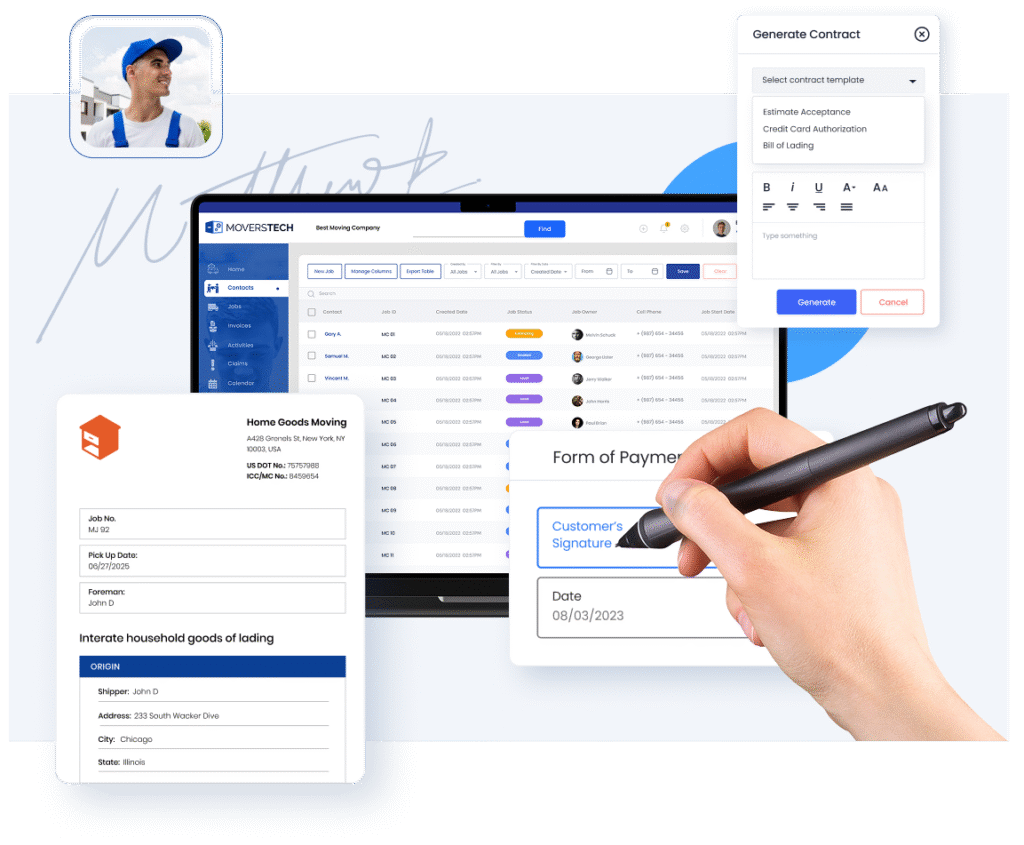
In most offices, the documents are there. Forms were signed, scanned, and emailed. Files were saved and forwarded more than once. Yet when signed forms are disputed, finding them becomes the real problem. Staff digs through inboxes, shared drives, and old folders while the clock keeps ticking. At that point, the issue is no longer about missing agreements. It is about poor access to moving company paperwork that should be ready in seconds, not searched for under pressure.
Respond fast to stop escalation early
Once a dispute is open, every hour matters. The first response shapes how serious the issue feels. When signed forms are disputed, delays signal uncertainty, even if the agreement is valid. This matters because two-thirds of customers judge service by how well a company respects their time. As time passes, frustration grows, and escalation becomes more likely. When the office responds with documents right away, the tone stays controlled. Speed does not just save time. It protects trust before doubt gains momentum.
Make documents defensible, not just complete
Many moving companies believe they are protected because paperwork exists somewhere. That belief fades quickly when signed forms are disputed. Protection depends on access, not storage. Documents must appear instantly, show clear timestamps, and connect directly to the job. If staff spend hours searching or confirming versions, the advantage is already lost. In claims reviews, slow proof feels like weak proof, no matter how fair the agreement actually was.
Use organized digital records to shift the conversation
When paperwork stays organized at the job level, the tone of a dispute changes fast. Instead of searching, the office opens the job and pulls the agreement in seconds. Signatures link to the correct date and version. Valuation choices appear clearly, including the selected valuation options for movers. When signed forms are disputed, this clarity removes emotion from the exchange. Facts take over, questions slow down, and the conversation stays grounded in what was accepted and when.

Present proof clearly to shorten disputes
A strong response stays calm and immediate. The office opens the job and pulls the agreement without searching. The valuation section appears clearly and matches the service provided. A timestamp confirms when acceptance happened. Clear documentation shortens the discussion. Arguments fade faster, claims move forward, and resolution happens without pulling the team into days of back and forth.
Prepare proof before disputes start
Most paperwork disputes do not come from bad intent or unfair terms. They come from poor access at the worst moment. When signed forms are disputed, clarity decides who stays in control of the conversation. The easier it is to retrieve proof, the harder it becomes to challenge a fair agreement. Strong operations remove doubt before it spreads. Good paperwork protects you when a problem appears. Also, it builds confidence while the dispute is active, when decisions move fast and pressure is high.
Frequently Asked Questions
Why do customers dispute signed moving documents after a move?

Customers often review paperwork only after the move is finished, when stress and unexpected costs appear. At that point, small gaps in documentation or unclear sections can raise questions about what was actually agreed to.
What paperwork is most often questioned during moving disputes?
The documents most commonly reviewed during disputes include the Bill of Lading, valuation coverage selections, service agreements, and credit card authorizations. Missing initials, unclear selections, or incomplete sections can weaken these records.
How can moving companies protect themselves during paperwork disputes?
Protection comes from having clear, complete documents that are easy to retrieve. When agreements, signatures, and timestamps are tied directly to the job file, offices can quickly present proof and prevent disputes from escalating.
Why is document retrieval speed important in moving disputes?
When a dispute starts, the first response sets the tone. If the office can quickly show the signed agreement and valuation choices, questions are resolved faster. Slow retrieval often increases doubt and prolongs the dispute.
